Gutter Cleaning in Denver, CO
Denver has 354,579 public trees on the city's own inventory, 14 neighborhoods where the typical house is older than 1950, and a hail record that runs into the hundreds of reports. All three end up in your gutters. This guide compares the 51 gutter businesses that show up on Google's map and explains, neighborhood by neighborhood, what your gutters are up against.
Why Denver gutters fill up so fast
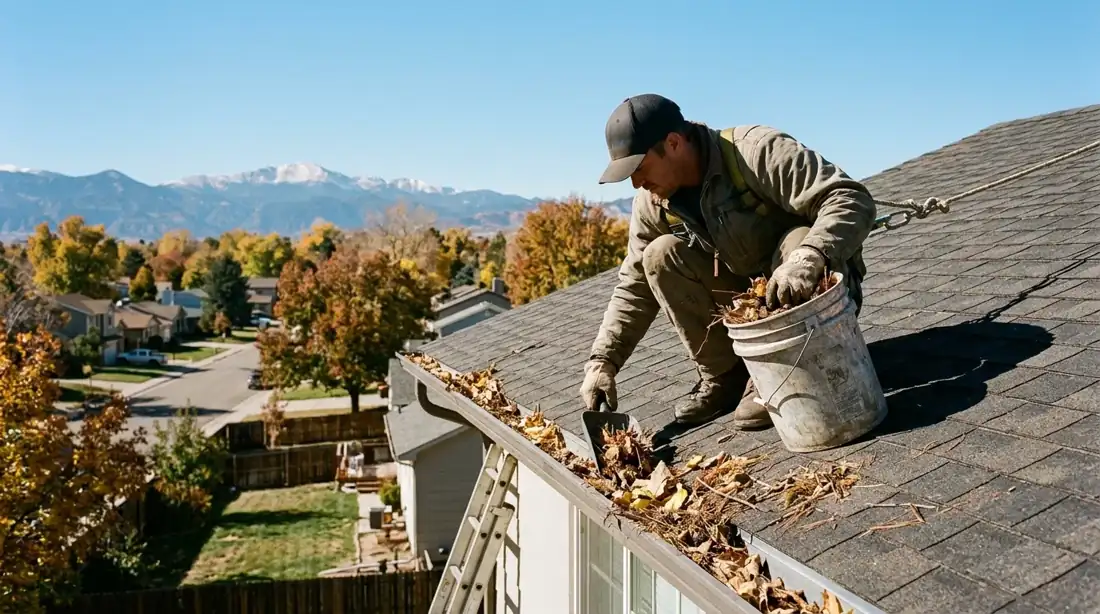
The most common street trees in Denver's inventory are honey locust (22,477), green ash (21,326), silver maple (6,770). Honey locust drops leaflets small enough to slip through gutter screens; green ash sheds almost all its leaves in a single cold week of October; Siberian elm buries gutters in papery seeds in spring, months before any leaf falls. The leafiest neighborhoods are Country Club (34.1% canopy), South Park Hill (33.0% canopy), Congress Park (29.4% canopy), but even the newest subdivisions have young trees that grow every year. Add cottonwood fluff in June, hail from May to August and freeze-thaw cycles from November to March, and a Denver gutter has a hard life.
Every gutter business on the map
Each one has its own page with phone, address, hours, rating and what its listing actually shows. Tap a name to see the details and call directly.
See them on the map
Orange, green and red pins are businesses (colored by rating); small blue dots are the 78 neighborhood pages. Tap any of them.
Gutter cleaning by neighborhood
All 78 official Denver neighborhoods, each with its own page: how old the houses are, which trees grow there, how much canopy covers the roofs, the hail record and the gutter businesses closest to it.
Photo gallery
Gutters in Denver through the year: fall leaves, cottonwood fluff, hail, ice dams and the work that fixes them. See all 105 photos.
When to book in Denver
Denver gutters fill in two waves. The first is late spring, when elm and maple seeds and then cottonwood fluff come down in May and June. The second, and bigger, is fall: green ash and honey locust drop from early October, and the last maples hang on until the first hard freeze in November. Booking one cleaning in early June and one in mid-November covers both, and the November visit has a second job: making sure the gutters are empty before snow and ice sit in them all winter.
What a proper cleaning includes
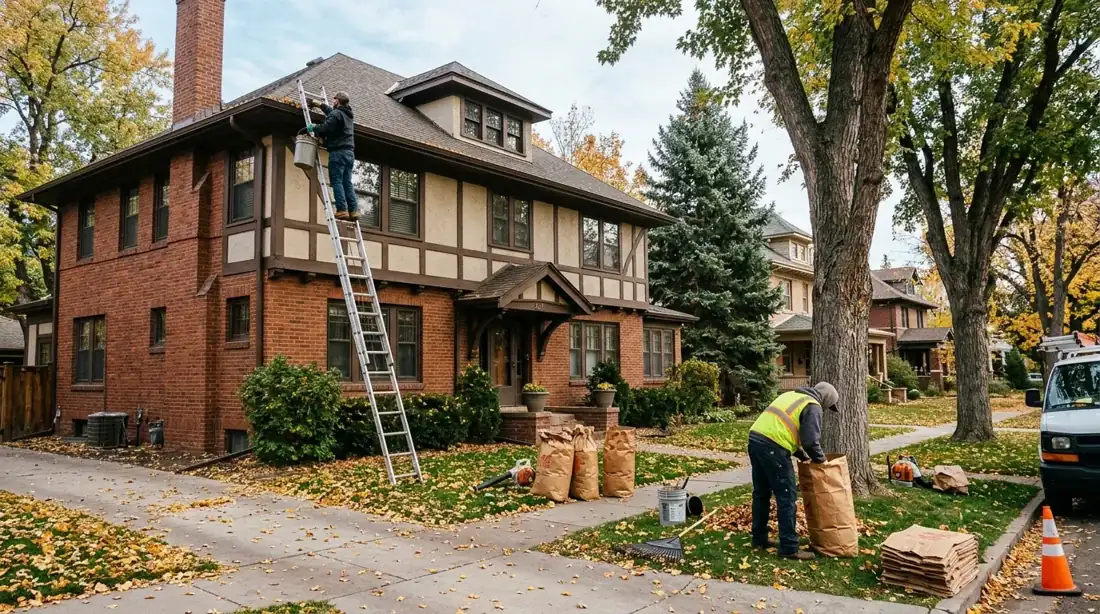
A complete gutter cleaning is more than scooping leaves. Debris should be removed by hand or vacuum and bagged, not blown onto the lawn; every downspout should be flushed with water to prove it drains; and the crew should point out loose hangers, leaking seams or gutters that slope the wrong way. Ask for before-and-after photos, because you cannot see the inside of a gutter from the ground.
What drives the price
Gutter cleaning is usually priced by linear foot and by number of stories. A single-story ranch with long, straight runs is the cheapest job; a two- or three-story Victorian with steep roofs and many corners is the most expensive. Guards add time, because they must be lifted or cleaned from above, and so does a gutter that has not been cleaned in years.
Snow, ice and full gutters
Denver's sunny winter days melt snow on the roof that refreezes at the eaves at night. If the gutters are already full of leaves, that water freezes in place, the weight pulls on the hangers and ice dams can push water under the shingles. Empty gutters before the first big snow are the cheapest protection there is.
Why it matters below ground
Much of Denver sits on expansive clay that swells when wet. A downspout that dumps water next to the foundation, or a gutter that overflows along one wall, can soak that clay, crack basement walls and flood window wells. Clean gutters and downspout extensions that carry water at least four to six feet away are basic foundation care here.